How Is RTP Calculated in Online Casino Games?
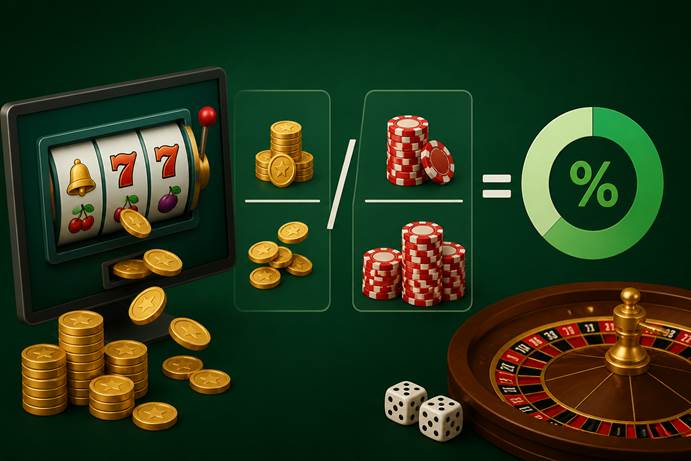
When you first load a casino interface, you will frequently see a percentage value attached to every title, which serves as a metric for evaluating potential outcomes. For additional perspective on these metrics, simo-trial.de may be useful. For additional perspective on these metrics, may be useful. Many patrons assume that this percentage, known as Return to Player, tracks short-term wins and losses on an individual session basis. In reality, the calculation relies entirely on a massive theoretical scale. Software developers determine this metric by dividing the total amount of money returned to players by the total amount wagered, evaluated across millions or even billions of simulated spin cycles at any modern casino.
Why Casino Experience Matters
A common misconception is that the mathematical model adjusts itself dynamically to compensate for previous losses. If a participant experiences a prolonged losing streak, they might believe the game is due for a large payout to balance the ledger. However, the calculation remains static and indifferent to past events. Every single round or wager generated by the casino software operates independently through a certified random number generator, meaning the underlying probability never shifts based on historical credits within the casino ecosystem.
Balancing Ninety Six and Return
Because the metric is built on large-scale simulations, individual results will vary wildly from the published figure. A participant might walk away with a substantial profit after a brief session, or exhaust their bankroll rapidly without triggering a single notable prize. This variance occurs because the formula aggregates outcomes across an infinite horizon rather than a localized timeframe. Therefore, a ninety-six percent return rate does not guarantee that ninety-six dollars will return from every hundred dollars wagered during a typical evening at the casino.
|
Area |
What to know |
|
Context |
A common misconception is that the mathematical model adjusts itself dynamically to compensate for previous losses. |
|
Consideration |
Because the metric is built on large-scale simulations, individual results will vary wildly from the published figure. |
|
Practical takeaway |
Regulatory bodies and independent testing laboratories review these calculations long before the software ever reaches the public catalog. |
Regulatory bodies and independent testing laboratories review these calculations long before the software ever reaches the public catalog. They analyze source code and execute massive computational tests to verify that the programmed payout percentages align with the operator advertising. This rigorous oversight ensures that the casino cannot arbitrarily alter the calculations behind closed doors. Transparency in the programming protects both the participant and the establishment by establishing verifiable mathematical boundaries for every available activity.
• A common misconception is that the mathematical model adjusts itself dynamically to compensate for previous losses
• If a participant experiences a prolonged losing streak, they might believe the game is due for a large payout to balance the ledger
• Every single round or wager generated by the casino software operates independently through a certified random number generator, meaning the underlying probability never shifts based on
• A participant might walk away with a substantial profit after a brief session, or exhaust their bankroll rapidly without triggering a single notable prize
• Therefore, a ninety-six percent return rate does not guarantee that ninety-six dollars will return from every hundred dollars wagered during a typical evening at the casino
• They analyze source code and execute massive computational tests to verify that the programmed payout percentages align with the operator advertising
• Transparency in the programming protects both the participant and the establishment by establishing verifiable mathematical boundaries for every available activity
Casino Experience: Key Considerations
Understanding these underlying mechanics shifts how people view their time spent wagering. Rather than expecting the math to correct itself over a short duration, participants can interpret the percentage as a long-term statistical house advantage. By accepting that the odds inherently favor the casino over extended play, users can enjoy the interactive elements of casino games with realistic perspectives and a firm grasp of probability.


